Automation

Stop repetitive manual work. We automate the processes that currently take up time and attention, so you can focus on the work that truly matters.

Works in the background, without having to worry about it

Fewer human errors

Integration with all your systems
Power BI HR dashboard

Recognizable problem?

Always the same actions.

Retyping data, preparing files, forwarding emails. Every single week.

Systems do not talk to each other.

From one system to another. Error-prone, slow, and it doesn't make anyone happy.

Errors creep in.

One forgotten step or incorrect input and you waste hours fixing it. Manual work simply scales poorly.

Recognizable problem?

Always the same actions.

Retyping data, preparing files, forwarding emails. Every single week.

Systems do not talk to each other.

From one system to another. Error-prone, slow, and it doesn't make anyone happy.

Errors creep in.

One forgotten step or incorrect input and you waste hours fixing it. Manual work simply scales poorly.

Already developed 300+ solutions for, among others,

Power BI sales dashboard
Power BI HR dashboard

automation

What is process automation?

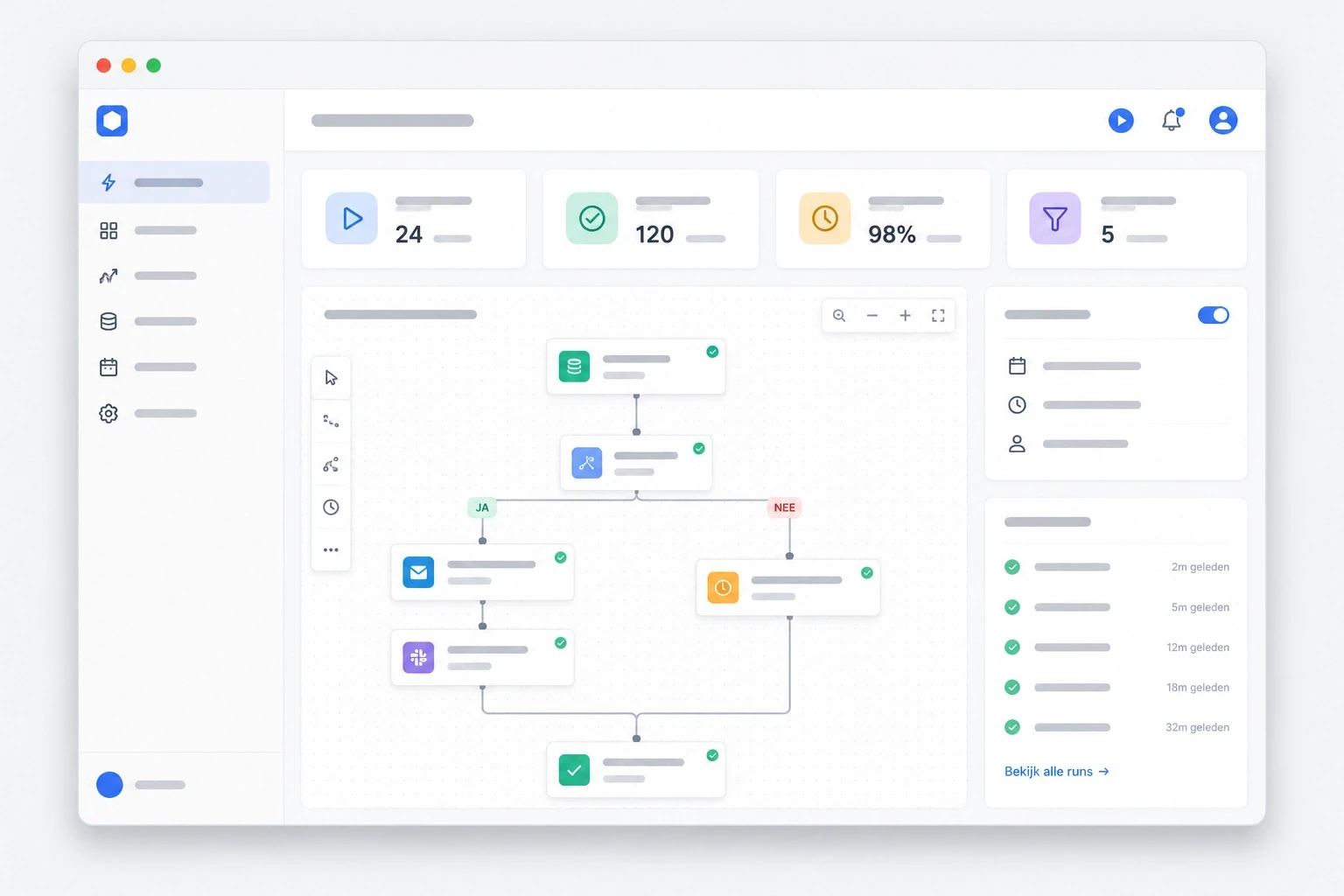
Repetitive work. Process automation is the automation of recurring, manual steps in your work processes. Instead of someone performing the same actions over and over again, you let software do the work: data is automatically exchanged between systems, tasks are initiated at the right time and you automatically receive a notification as soon as something needs attention.

Examples. Think of automatically importing and processing invoices, linking systems that currently do not communicate with each other, automatically sending reports or reminders, or triggering a follow-up action as soon as something changes, for example, an order that is automatically created as soon as stock levels get too low.

Custom-made. Unlike custom software development, we do not build a complete application here, but specifically target the individual tasks that currently consume time and attention, often linked to the systems you already use, such as Exact and AFAS.

Runs itself

Runs itself

ISO 27001

Fewer errors

ISO 27001

Integrates systems

Integrates systems

Live data

Super fast

Live data

automation

Why have processes automated?

Less manual work, more time. We take care of the repetitive actions, so your people can spend their time on work that actually matters. What takes hours now, will soon happen automatically in the background.

Fewer errors, greater reliability. Manual retyping and copying is prone to error. An automated process performs the exact same steps every time, without forgotten steps or typos. This allows you to trust the outcome.

Less vulnerable, more scalable. Processes that depend on a single person or manual action are vulnerable. Automated processes continue to run smoothly, even during busy periods or holidays, and scale effortlessly as your volume increases.

One truth

Saves time

One truth

Always available

Always up to date

Always available

Fewer errors

Scales along

Fewer errors

More information

You stay in control

More information

Tim Jeeninga and Jesper de Groot, founders of Quikk Data Solutions

cases

These companies came before you.

cases

These companies came before you.

cases

These companies came before you.

method

method

Our method.

This approach is no coincidence. It stems from years of experience with automation projects at various organizations. We know where processes stall and have designed every step so that you see quick results without unnecessary detours. This allows us to use your time and ours efficiently, delivering a dashboard you can rely on from day one.

Background Image

01

Introduction

We thoroughly analyze your organization and map out your IT landscape: which data sources, systems, and processes exist? We want to truly understand what you do, so we can think along with you about what works for you.

Background Image

01

Introduction

We thoroughly analyze your organization and map out your IT landscape: which data sources, systems, and processes exist? We want to truly understand what you do, so we can think along with you about what works for you.

Background Image

02

Selecting the processes

Not everything needs to be automated. Together, we determine which processes take up the most time or are most prone to errors, so we start where the gain is greatest.

Background Image

02

Selecting the processes

Not everything needs to be automated. Together, we determine which processes take up the most time or are most prone to errors, so we start where the gain is greatest.

Background Image

03

Build & connect

We build the automation and connect the involved systems with each other. Everything according to solid software engineering principles, so that it is robust and maintainable, and you can rely on it to keep running.

Background Image

03

Build & connect

We build the automation and connect the involved systems with each other. Everything according to solid software engineering principles, so that it is robust and maintainable, and you can rely on it to keep running.

Background Image

04

Delivery & management

You will receive a working, documented process. We make sure you know how it works and remain available as a partner for management and further development. You always stay in control.

Background Image

04

Delivery & management

You will receive a working, documented process. We make sure you know how it works and remain available as a partner for management and further development. You always stay in control.

questions

questions

Frequently asked questions.

Frequently asked questions.

What kind of processes can you automate?

From invoice processing and billing to reporting, inventory management, and system integration. For example, for De Vries Trappen, we automated various manual Excel processes surrounding turnover information. And at Ceramica, the system automatically generates new orders as soon as the stock falls below a set threshold.

What is the difference with custom software?

Can you integrate with the systems we already use?

How long does it take to automate a process?

Who is the owner of the automation?

Can you also take on the management and further development?

How secure is my data?