Data Engineering

Bring all your data sources together into one solid foundation.

All sources connected & automatically refreshed

Clean & reliable data as a foundation

Ready for AI, dashboards & automation

Recognizable problem?

You do everything manually in Excel.

Merging manually, and nobody knows which version is correct.

You are steering based on outdated figures.

You are steering based on last month instead of today. By the time the figures arrive, they are already outdated.

Data is scattered.

Information is scattered across different systems. Bringing it together takes a lot of time.

Recognizable problem?

You do everything manually in Excel.

Merging manually, and nobody knows which version is correct.

You are steering based on outdated figures.

You are steering based on last month instead of today. By the time the figures arrive, they are already outdated.

Data is scattered.

Information is scattered across different systems. Bringing it together takes a lot of time.

Recognizable problem?

You do everything manually in Excel.

Merging manually, and nobody knows which version is correct.

You are steering based on outdated figures.

You are steering based on last month instead of today. By the time the figures arrive, they are already outdated.

Data is scattered.

Information is scattered across different systems. Bringing it together takes a lot of time.

Already developed 300+ solutions for, among others,

Power BI sales dashboard
Power BI HR dashboard

data engineering

What is Data Engineering?

Solid foundation. Data engineering is the foundation beneath all your reports, dashboards, and analyses. It is the work that normally remains invisible, but determines everything: connecting your data sources, building data models and pipelines, and setting up a data warehouse, so that your data is available reliably, up-to-date, and at scale.

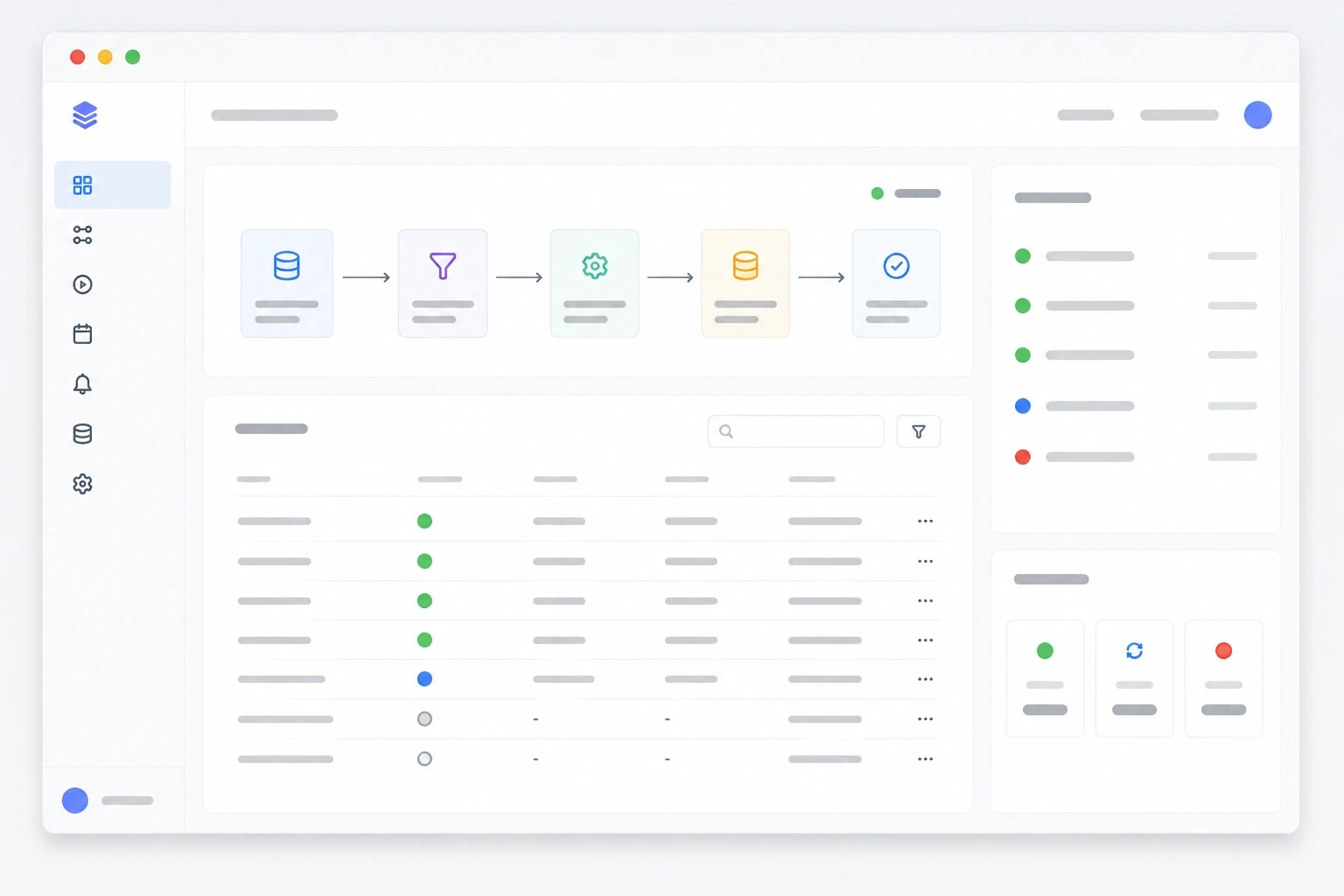
Smart pipelines. Specifically, this involves connecting data sources, automating data flows (ETL and ELT), designing data models, setting up a data warehouse, and establishing data governance on modern cloud platforms such as Azure, Oracle, GCP, and AWS.

Automatic

Automatic

ISO 27001

ISO 27001

One data source

One data source

AI-ready

AI-ready

data engineering

Advantages of a data warehouse.

One reliable source of truth. Data from different systems comes together logically and manageably, contradictions are eliminated, and with strong data governance, your data is reliable, secure, and compliant. This way, your entire organization works from the same figures.

No manual work, always up to date. We build robust data pipelines that automate your data flows. This reduces manual work, prevents errors and ensures your data is consistently and always available up to date.

Scalable and future-proof. We design a data strategy and architecture that grows with your organization, built on solid software engineering principles and fitting within your existing IT environment. Not only working, but also sustainable, maintainable, and ready for the future.

One truth

One truth

Always available

Always available

Fewer errors

Fewer errors

More information

More information

Tim Jeeninga and Jesper de Groot, founders of Quikk Data Solutions

cases

These companies came before you.

cases

These companies came before you.

cases

These companies came before you.

method

method

Our method.

This way of working is no coincidence. It stems from years of experience in Data Engineering projects at a wide variety of organizations. We know where processes get stuck and have designed every step so that you see quick results without unnecessary detours. This is how we make efficient use of your time and ours, and you deliver a dashboard that you can build on from day one.

Background Image

01

Introduction

We thoroughly analyze your organization and map out your data landscape: which data sources, systems, and processes exist? We want to truly understand what you do, so that we can actively think along about what works for you.

Background Image

01

Introduction

We thoroughly analyze your organization and map out your data landscape: which data sources, systems, and processes exist? We want to truly understand what you do, so that we can actively think along about what works for you.

Background Image

02

Design of architecture & data model

Based on your needs, we design the data architecture and the data model. We determine which source is leading, how data logically comes together, and how we set up governance—the crucial step that guarantees the security of your data.

Background Image

02

Design of architecture & data model

Based on your needs, we design the data architecture and the data model. We determine which source is leading, how data logically comes together, and how we set up governance—the crucial step that guarantees the security of your data.

Background Image

03

Building pipelines & integrations

We connect your sources, build automated data pipelines, and set up your data warehouse on the platform that suits you (Azure, Oracle, GCP, or AWS). Everything is built according to solid software engineering principles, ensuring it is robust and maintainable.

Background Image

03

Building pipelines & integrations

We connect your sources, build automated data pipelines, and set up your data warehouse on the platform that suits you (Azure, Oracle, GCP, or AWS). Everything is built according to solid software engineering principles, ensuring it is robust and maintainable.

Background Image

04

Delivery, governance & management

You will be provided with a reliable, documented data source. We set up the governance and can remain a partner for management and further development. You always retain control.

Background Image

04

Delivery, governance & management

You will be provided with a reliable, documented data source. We set up the governance and can remain a partner for management and further development. You always retain control.

FAQ

FAQ

Frequently asked questions.

Frequently asked questions.

Which systems and cloud platforms do you work with?

We have experience with Azure, Oracle, GCP, and AWS, and work with Microsoft Fabric and SQL Server. We connect to more than 150 data sources, from Excel, databases, and cloud platforms to software like AFAS and Exact. Is your source not supported by default? Then we will build a custom connector.

Our data is scattered across multiple systems that contradict each other. Can you solve that?

How long does a data engineering process take?

Who is the owner of the solution?

Can you also take on the management and further development?

What do you need from us to get started?

How do you ensure that our data remains secure?